


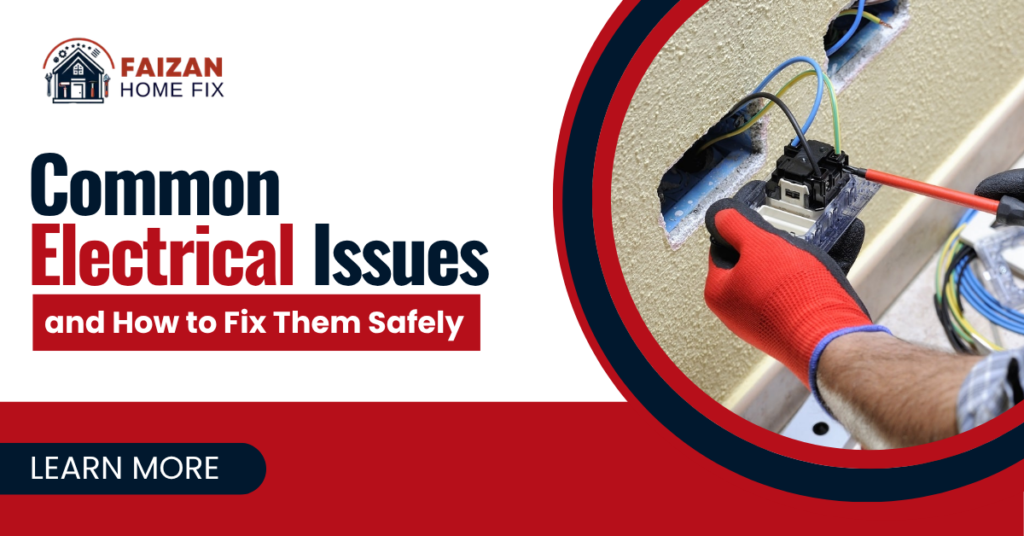
Electrical problems are part of everyday life. Whether it is a flickering light, a dead socket, or a circuit breaker that keeps tripping, these Electrical Common Issues can be frustrating, confusing, and sometimes dangerous. The good news is, most of them have simple explanations and clear solutions.
In this guide, we will walk you through the most common Electrical Common Issues in the home, explain what causes them in plain language, and tell you when you can handle them yourself — and when you absolutely need a professional electrician. If you are in Dubai, our team provides fast and reliable electrical repair services to handle any issue safely.
Let’s get started.
Frequent Circuit Breaker Trips
One of the most common electrical problems homeowners face is a circuit breaker that keeps tripping. A tripped breaker is not a random annoyance — it is your electrical system sending you a warning signal.
What Causes It?
- Circuit overload — too many appliances drawing power from one circuit
- Short circuit — a live wire touching a neutral wire
- Ground fault — current leaking to an unintended path
- Overcurrent protection activates due to aging or a faulty breaker
How to Fix It
If the breaker trips after you plug in too many devices, reduce the load and spread appliances across different circuits. If it trips repeatedly even with nothing plugged in, that is a sign of a short circuit or a faulty breaker — call a professional for electrical diagnosis immediately.
Quick Tip: Never tape a breaker in place or use a coin in a fuse box. This is extremely dangerous and can cause house fires.
Flickering or Dimming Lights
Flickering lights are one of the most commonly reported general electrical issues. They may seem like a small annoyance, but they can point to a more serious underlying problem.
What Causes It?
- Loose wiring connections behind the switch or in the ceiling fixture
- Faulty switches and panels
- Voltage fluctuations from the main supply
- High-voltage appliances like ACs or refrigerators are causing line voltage drops
- Outdated Wiring that cannot handle the current load
How to Fix It
Start by replacing the bulb. If the flickering continues, check the switch — a faulty switch is often the culprit. If the lights dim throughout the entire house when a large appliance starts, it may be a load balancing issue or a supply voltage problem. An electrician should inspect the panel and Wiring.
Electrical Outlets Not Working (Dead Plug Sockets)
You plug in your phone or laptop, and nothing happens. Dead plug sockets are a frustrating but very common electrical problem in homes and offices.
What Causes It?
- Tripped GFCI outlet — the built-in safety switch has tripped
- Tripped circuit breaker for that specific circuit
- Loose connections behind the outlet
- Burnt or damaged outlet from a power surge
- Connection problems in the junction box
How to Fix It
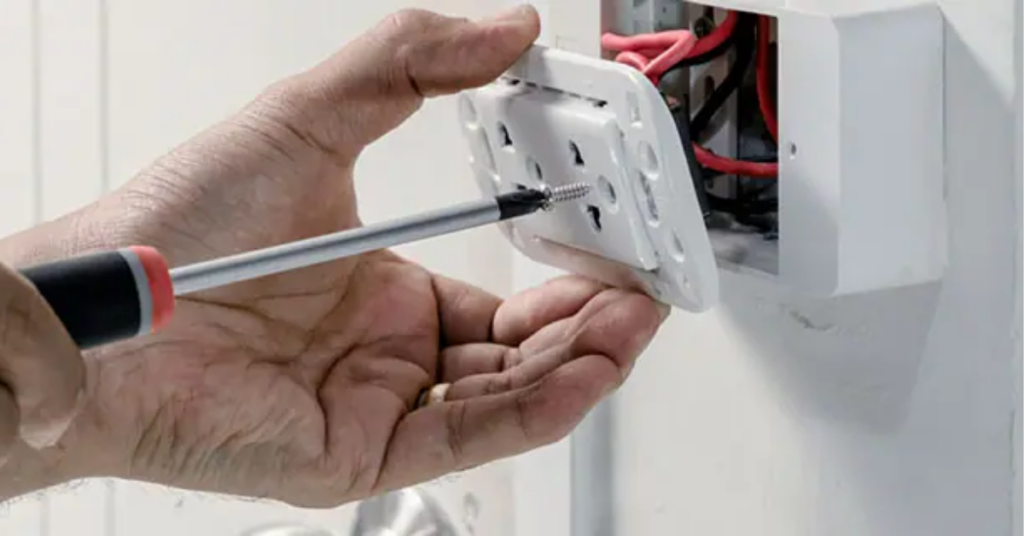
First, look for a GFCI outlet nearby (usually in kitchens or bathrooms) and press the RESET button — this often fixes dead sockets in other parts of the room. Next, check your breaker panel for a tripped switch. If neither of these works, the outlet itself may be burned, or the Wiring behind it may be loose. At this point, call an electrician. Never try to open an outlet without switching off the power first.
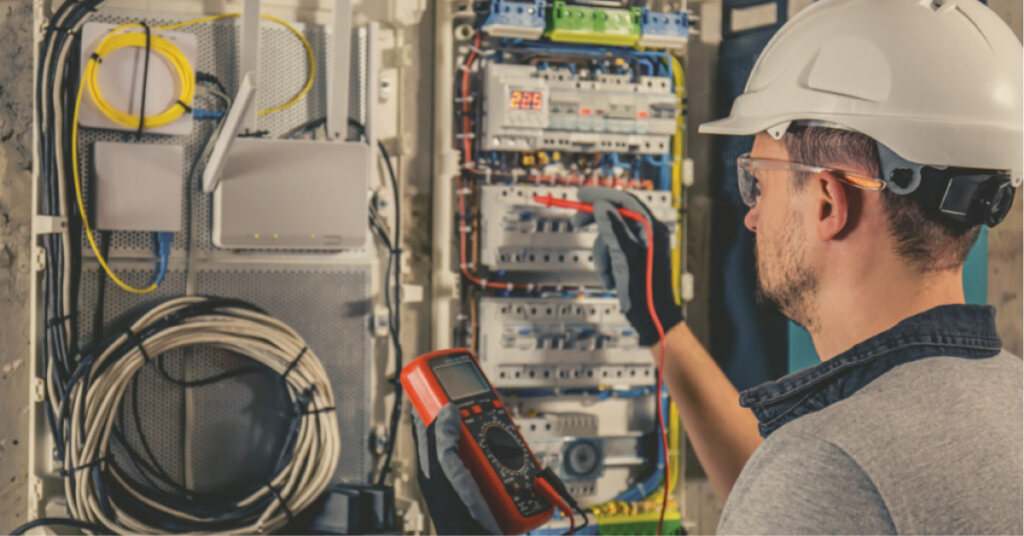
Buzzing Sounds from Electrical Panels
A properly working electrical panel should be silent. If you hear a buzzing, humming, or crackling sound coming from your switchboard or panel, do not ignore it.
What Causes It?
- Loose wiring connections inside the panel
- Overloaded circuit causing hum in Wiring
- Faulty or aging circuit breaker
- Arc fault — electricity jumping between loose contacts
- Electrical switchboard issues such as corrosion or damaged bus bars
How to Fix It
Buzzing from an electrical panel is a red flag. This is not a DIY fix. Turn off major appliances and call a licensed electrician right away. An arc fault inside a panel can cause a fire inside the wall within minutes. This requires immediate electrical diagnosis and repair.
Warning: If you smell burning plastic or see scorch marks near the panel, leave the area and switch off the main power immediately.
High Electricity Bills
If your electricity bill is unusually high without any change in your usage habits, there may be hidden electrical problems causing current leakage or wattage issues in your home.
What Causes It?
- Current leakage from damaged or uninsulated wires
- Faulty appliances drawing power even when switched off
- Outdated Wiring with high resistance
- Poor grounding causing inefficient current flow
- Old, inefficient electrical panel is losing energy
How to Fix It
Start by unplugging all non-essential devices and checking if the meter still spins. This can reveal phantom loads. Have an electrician perform a full energy audit and check for faulty Wiring, current leakage, and power factor issues. Upgrading old Wiring and installing a new panel can significantly reduce bills.
Overloading — A Hidden Danger in Every Home
Overloading is one of the most common yet overlooked electrical problems in industries and homes alike. It happens when more electricity is drawn from a circuit than it was designed to handle.
What Causes It?
- Using multiple high-wattage devices on a single circuit
- Using extension cords as permanent solutions
- Old homes with circuits rated for older, lower-power devices
- Wattage issues — devices rated higher than the circuit capacity
How to Fix It
Spread your appliances across multiple circuits. Avoid daisy-chaining extension cords. If you regularly need more outlets in a room, have an electrician install a dedicated circuit. The 80% rule applies here — a circuit should never be loaded beyond 80% of its rated capacity continuously.
Loose Wiring Connections and Faulty Switches
Loose connections are one of the leading causes of common electrical problems and solutions queries online. A loose wire inside a switch, outlet, or junction box creates resistance — and resistance creates heat.
What Causes It?
- Wire corrosion over time
- Vibration causing screws to loosen
- Poor original installation
- Tangled wires are causing strain on connections
- Repeated switching causes mechanical wear on switch contacts
How to Fix It
If a switch feels hot, sparks when used, or controls lights inconsistently, it needs to be replaced. A qualified electrician should always handle faulty switches and panels. Loose Wiring is particularly dangerous because it can cause arcing, which is a major fire risk.
Power Outages — Local vs. Whole-Home
Not all power outages are caused by the utility company. Sometimes the outage is limited to your home or a section of it — and that points directly to an internal electrical problem.
What Causes It?
- Tripped main breaker due to a whole-home overload
- Transformer failure on the street or building level
- Phase issues in three-phase electrical systems
- Disconnection issues at the main distribution board
- Blown fuse in older fuse-based systems
How to Fix It
Check if your neighbours have power. If they do, the problem is internal. Check your main breaker panel first. If the main breaker has tripped, reset it after reducing all loads. If it trips again, call an emergency electrician. In Dubai, DEWA outages can be confirmed via their app or website — always rule this out first.
Chewed or Damaged Wires
This might sound unusual, but damaged Wiring is one of the most serious common electrical issues — and one of the most dangerous. Rodents chewing wires, physical damage from nails or screws, or simple wear over time can all expose live conductors inside your walls.
What Causes It?
- Rodent activity chewing through insulation
- Accidental damage during renovation or drilling
- Old, brittle insulation that cracks and flakes off
- Faulty Wiring that was never properly insulated
How to Fix It
Damaged wires must be replaced — not taped. Using electrical tape as a permanent fix is dangerous and against safety codes. A licensed electrician will locate the damage, replace the affected section, and ensure the new Wiring meets current standards. This is not optional — exposed wires are a direct fire and electrocution hazard.
Water and Electricity Mixing
Water and electricity are a deadly combination. This is one of the most serious electrical issues that can occur in kitchens, bathrooms, laundry rooms, and outdoor areas.
What Causes It?
- Outlets installed too close to water sources
- GFCI problems — protective outlets that are faulty or absent
- Moisture entering the electrical panel or junction boxes
- Poor grounding leaves the system vulnerable to a ground fault
- Flooding is causing water to reach Wiring inside the walls
How to Fix It
Always install GFCI outlets in wet areas — this is a building code requirement in most countries, including the UAE. If you suspect moisture inside your electrical panel or walls after flooding, do not turn on the power. Call an emergency electrician immediately. This situation can be fatal.
Common Electrical Issues — Quick Reference Table
Problem
Flickering Lights |
Dead Outlets |
Buzzing Panel |
Common Cause
Loose wiring / Faulty switch |
Tripped GFCI / Loose wire |
Arc fault / Loose connection |
Action Required
Check switch / Inspect wiring |
Reset GFCI / Call electrician |
Call electrician immediately |
Q: What are the most common electrical issues in the home?
The most common ones include frequent circuit breaker trips, flickering lights, dead outlets, buzzing panels, high electricity bills, loose wiring connections, and damaged or exposed wires. All of these are explained in detail in this guide.
Q: How do I know if my electrical problem is dangerous?
Any electrical issue involving burning smells, sparking outlets, buzzing panels, warm switches, or water near electrical points is dangerous and needs immediate professional attention. Do not attempt to fix these yourself.
Q: What are common electrical problems that require troubleshooting?
Overloaded circuits, ground faults, GFCI problems, arc faults, and faulty Wiring are the most common issues that require proper electrical diagnosis and troubleshooting with specialized equipment.
Q: What are common electrical problems in HVAC systems?
HVAC units commonly suffer from capacitor failure, loose wiring connections, heating issues due to overcurrent protection trips, and phase issues in three-phase systems. A certified HVAC electrician should always check these.
Q: Can I fix electrical issues myself?
Minor tasks like resetting a GFCI outlet or checking a tripped breaker are generally safe for homeowners. However, anything involving Wiring, panels, or persistent faults should always be handled by a licensed electrician. Electrical work done incorrectly can be fatal.
Final Thoughts: Never Ignore an Electrical Problem
Common electrical issues may seem small at first — a flickering light here, a dead socket there. But left unchecked, even the most minor electrical problem can grow into a serious safety hazard. Faulty Wiring, poor grounding, and overloaded circuits are responsible for thousands of house fires every year.
The smartest thing you can do is act early. Identify the warning signs, reduce unnecessary loads, and call a qualified electrician for any issue you cannot resolve with a simple reset or switch change.
If you are in Dubai and dealing with any of the common electrical problems listed above — whether it is an electrical switchboard issue, a tripping breaker, or damaged Wiring — our team is ready to help. We offer comprehensive electrical repair services, same-day electrical diagnosis, and 24/7 emergency support across Dubai.
Your safety comes first. Contact us today for a free electrical inspection and let our certified electricians solve your problem safely and efficiently.