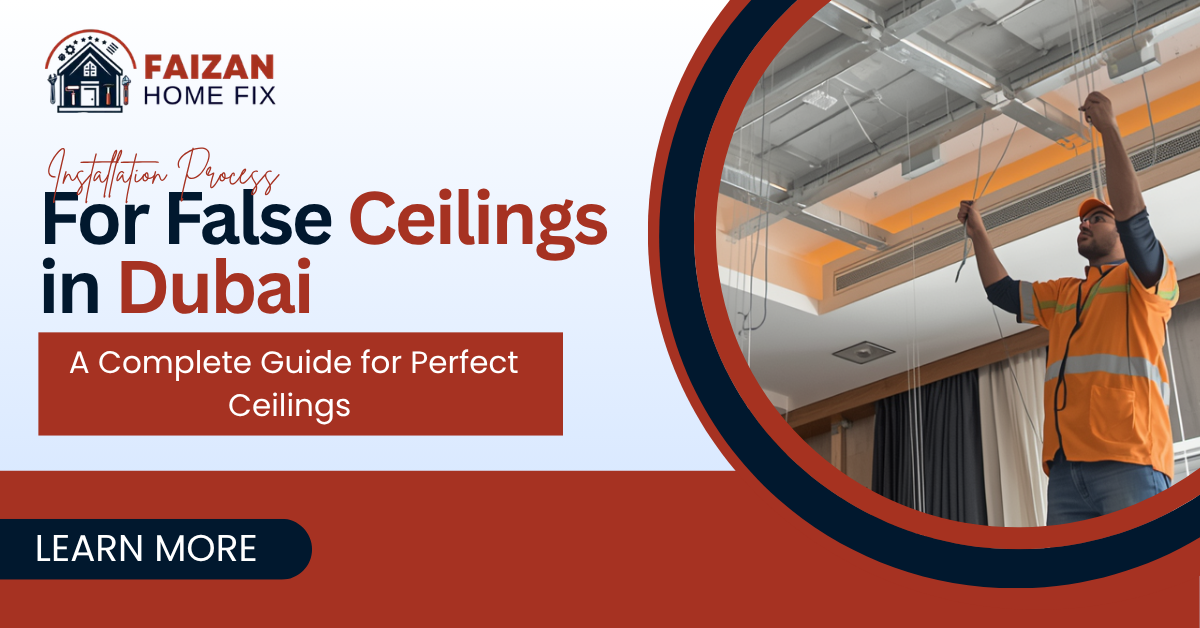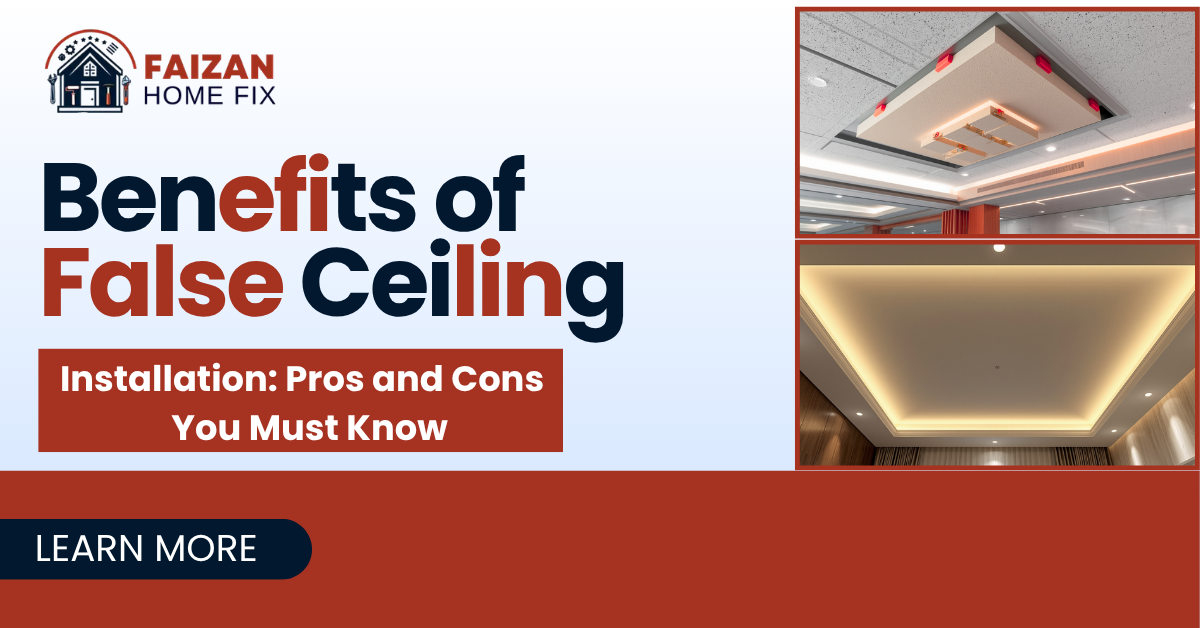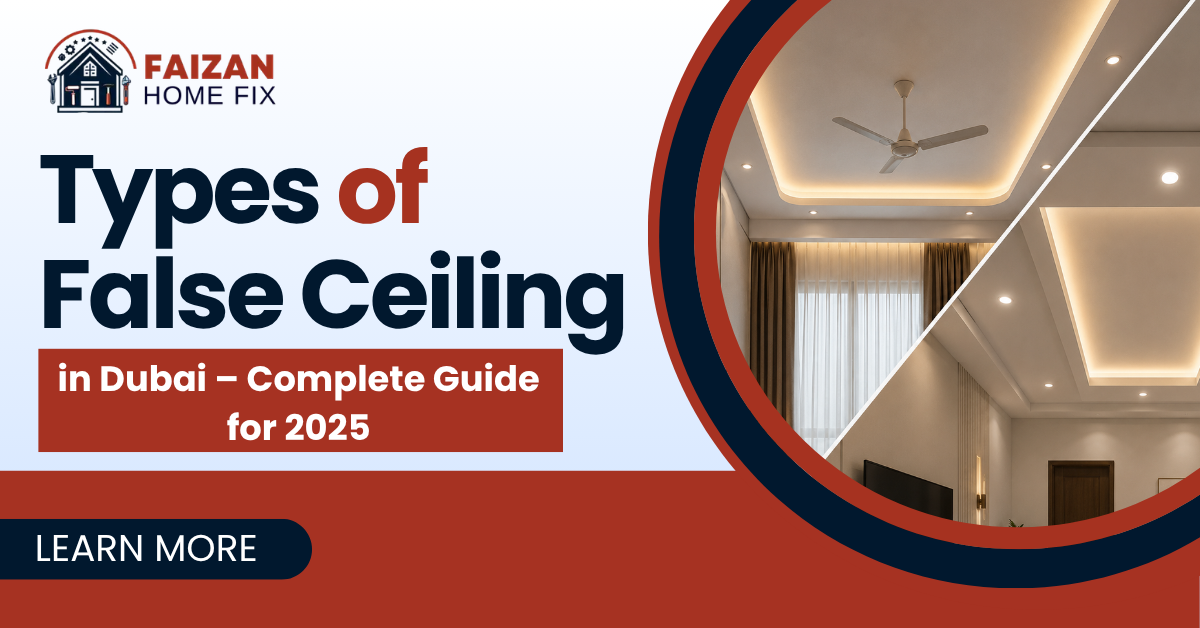
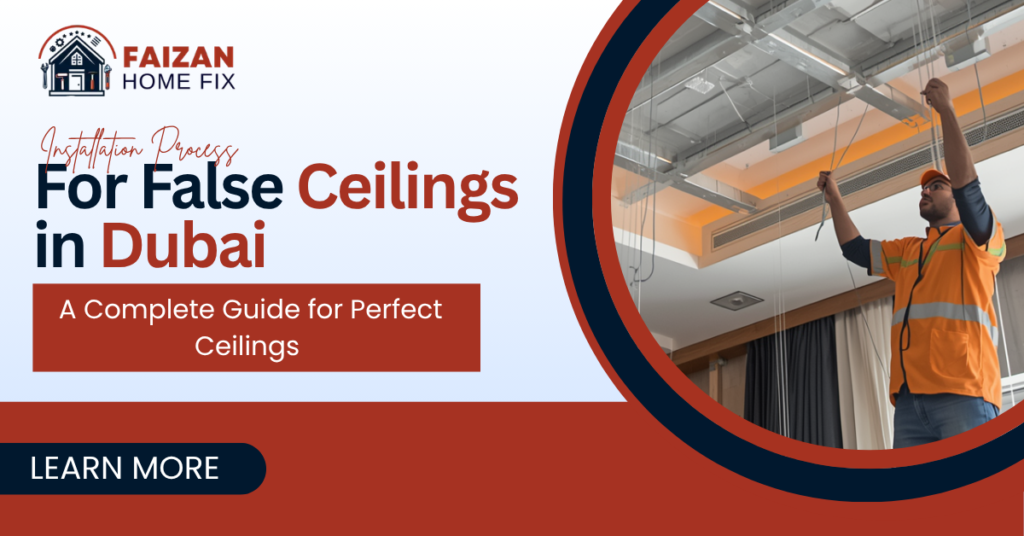
If you have ever walked into a stylish office, a luxury hotel room, or a beautifully finished home in Dubai and looked up at that smooth, modern ceiling, chances are you were looking at a false ceiling. The installation process for false ceilings in Dubai has become one of the most in-demand interior services in the UAE. Whether you want to add hidden lighting, hide ugly wires, or make a room look bigger and cleaner, false ceilings do the job beautifully.
In this guide, we will walk you through everything — from choosing the right materials to the final coat of paint. This article is designed for anyone, even if you have never dealt with a ceiling project before. Let’s get started.
What Is a False Ceiling?
A false ceiling, also called a dropped ceiling or suspended ceiling, is a secondary ceiling that is built below the main structural ceiling of a room. It creates a gap between the two layers, and this gap can be used to run electrical wires, air conditioning ducts, and lighting systems — all hidden neatly out of sight.
In Dubai, false ceilings are extremely popular in both homes and commercial spaces. They help manage the heat, improve acoustics, and make interiors look polished and modern. You will find them in villas, apartments, restaurants, malls, offices, and hospitals all across the city.
How to Choose False Ceiling Material
Before you start any installation, the first step is to pick the right material. Each type has its own benefits, and the choice depends on your budget, room type, and design preferences. Here are the most common options used in Dubai:
1. Gypsum Board (Most Popular)
Gypsum board is the go-to choice for most residential and commercial projects. It is lightweight, fire-resistant, and gives a very smooth and clean finish. It is also easy to paint, cut into shapes, and repair if damaged. Most specialist gypsum false ceiling companies in Dubai prefer this material for its flexibility and durability.
2. PVC Panels
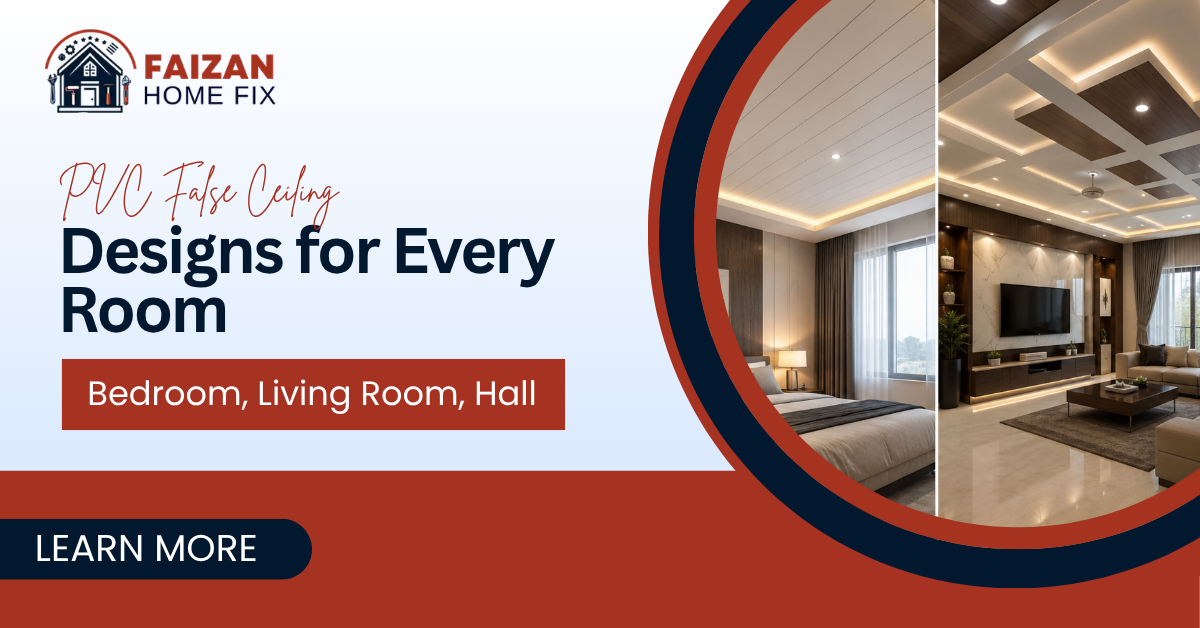
PVC (Polyvinyl Chloride) panels are waterproof and moisture-resistant, making them perfect for bathrooms, kitchens, and laundry areas. They come in many colors and textures and are very easy to clean.
3. POP (Plaster of Paris)
POP ceiling installation is best for decorative and custom designs. Plaster of Paris can be shaped into curves, domes, and detailed patterns. It is heavier than gypsum and takes longer to dry, but the results are stunning for luxury spaces.
4. Metal Grid Ceilings
Often seen in commercial spaces like offices and malls, metal grid ceilings use a suspended framework with removable tiles. They allow easy access to wires and pipes above — very practical for technical environments.
Tools & Materials Needed for False Ceiling Installation
Before the team begins work, they need to gather the right tools and materials. Here is a basic list:
- Measuring tape and level tool
- Metal channels and wall angles (for framing)
- Ceiling hangers and screws
- Gypsum boards, PVC panels, or POP mix
- Screwdriver or screw gun
- Jointing compound and paper tape
- Sandpaper, primer, and ceiling paint
- Cutting tools for board and tile work
- Electrical wiring tools and conduits
- Safety equipment — gloves, goggles, helmet
Initial Site Inspection & Design Discussion
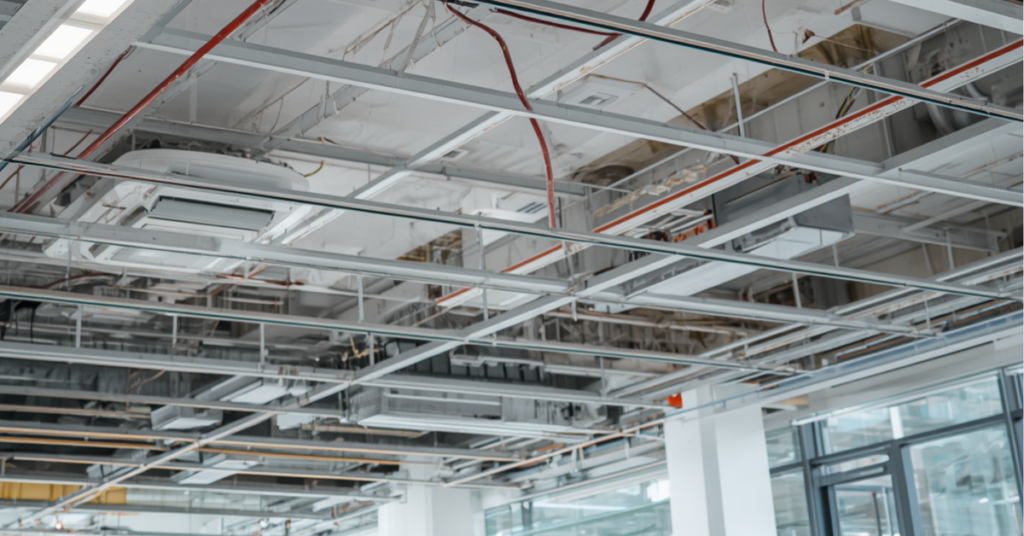
Every good false ceiling project starts with a proper site inspection. A trained professional visits the space, checks the room height, wall conditions, and existing electrical or HVAC systems. During this visit, the client and the design team discuss:
- The desired ceiling height and how much drop is needed
- The type of material that suits the room best
- Placement of lights, fans, AC vents, and speakers
- The overall design style — flat, tray, coffered, or curved
- Budget and timeline for the project
This step is very important because a detailed discussion prevents costly mistakes later. A good company will also provide a design sketch or 3D visualization before starting any physical work.
The Process of Installing a False Ceiling — Step by Step
Now, let us get into the actual installation process for false ceilings in Dubai. Here is how a professional team handles it from start to finish:
Step 1: Marking the Ceiling Level
The team starts by measuring the room and deciding the exact height of the new ceiling. Using a laser level or a water level tool, they mark a straight horizontal line all around the walls of the room. This line is the reference point for the entire installation — if it is not straight, nothing else will be either.
Step 2: Installing the Wall Angle
Metal wall angle pieces are fixed along the marked lines on all four walls. These L-shaped metal strips will support the edges of the ceiling boards. They are drilled into the wall with screws and plugs and must be perfectly level.
Step 3: Installing the Frame or Grid System
This is where the main structure of the false ceiling takes shape. The team installs:
- Main Channels: These are the primary metal beams that run across the length of the ceiling. They are hung from the original roof slab using metal hangers and screws, keeping them suspended at the marked level.
- Cross Members: Smaller cross channels are added between the main ones to form a solid grid pattern. This grid is what holds the ceiling boards in place.
The spacing of the grid depends on the board size used — typically 600mm x 600mm or 1200mm x 600mm for gypsum boards.
Step 4: Adding Electrical & HVAC Components
Before the boards go up, the electricians and AC technicians do their work inside the ceiling cavity. This includes running electrical conduits and wiring for lights, installing AC ducts and vents, placing speaker or security camera cables, and adding fire sprinkler pipes if required. This step must be completed and inspected before the ceiling is closed.
Step 5: Fixing the False Ceiling Boards
Once the grid is ready and all services are in place, the ceiling boards are fixed. For gypsum board ceilings, boards are screwed tightly to the metal framework. For POP ceiling installation, plaster is applied over a wire mesh or board frame and molded into the desired shape. For PVC ceilings, interlocking panels are clicked or glued into place.
Step 6: Ceiling Lighting Integration
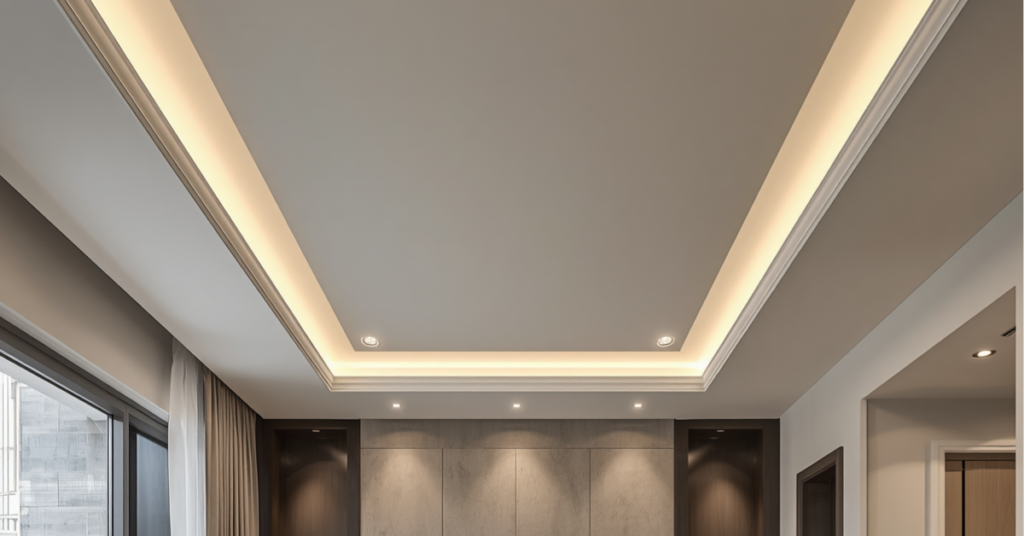
False ceiling light installation is one of the most exciting parts of the project. Holes are carefully cut in the ceiling boards for recessed spotlights, downlights, or LED strips. Chandelier points are reinforced from above. Cove lighting — where LED strips are hidden in a recessed channel — is also very popular in Dubai homes and hotels.
Step 7: Joint Treatment and Finishing
For gypsum board ceilings, all the joints between boards are filled with jointing compound. Paper tape is pressed into the wet compound, then another layer is applied and left to dry. Once dry, the surface is sanded smooth until no seams are visible. This step requires patience and skill — a poorly finished ceiling will show cracks or ridges after painting.
Step 8: Final Fitting of Lights and Fixtures
After sanding, a coat of primer is applied, followed by the final ceiling paint — usually white or a light color to reflect light. Once the paint is dry, the electricians return to fit the lights, switches, AC grilles, and any other fixtures. The project is now almost complete.
False Ceiling & Light Partitions Installation
Many homeowners and businesses in Dubai combine false ceiling work with light partition walls in the same project. Light partitions are interior walls made from metal studs and gypsum board — they are not load-bearing, meaning they are just used to divide space. Together, false ceilings and light partitions help transform open, empty spaces into fully functional rooms.
What We Install
- Gypsum board false ceilings (flat, tray, coffered, and curved designs)
- POP ceilings with custom ornamental details
- PVC ceilings for wet areas
- Metal grid ceilings for offices and commercial spaces
- Light partition walls for room dividing and privacy
- Integrated lighting and smart ceiling systems
Light Partitions
Light partitions are built using a steel stud frame filled with insulation and covered with gypsum boards on both sides. They can include door frames, glass panels, or even built-in shelves. These walls can be installed quickly and removed or moved in the future — making them ideal for rental properties and offices.
Integrated Lighting and Smart Ceiling Design
One of the biggest trends in Dubai interior design right now is the smart ceiling. Instead of basic light switches, smart ceilings use dimmable LED systems, color-changing strips, and motion sensors — all controlled by your phone or a voice assistant. During the installation process, the wiring for these systems is laid in advance, and smart switches or Zigbee/WiFi controllers are fitted before the boards are closed.
For more information about smart home lighting systems, you can visit Philips Hue Smart Lighting or Lutron Lighting Control Systems — both are trusted brands used in Dubai’s luxury projects.
Safety, Durability, and Compliance
In Dubai, all construction and fit-out work must comply with the standards set by Dubai Municipality and the relevant building authorities. A professional gypsum false ceiling company in Dubai will always use fire-rated materials, ensure proper load calculations for ceiling hangers, comply with Dubai Electricity and Water Authority (DEWA) regulations for electrical work, and maintain proper clearance for fire sprinklers and emergency systems.
Never hire an unlicensed team for false ceiling work. Poorly installed ceilings can sag, crack, or, in worst cases, collapse. Always ask for the company’s trade license, insurance, and previous project references before you sign a contract.
Where False Ceilings and Light Partitions Add Value
False ceilings are not just for luxury villas or five-star hotels. They add real value in many settings:
- Apartments and villas — Creates a premium finish and hides structural beams
- Offices — Improves acoustics, hides wiring, and adds a professional look
- Restaurants and retail shops — Sets the mood with creative lighting design
- Hospitals and clinics — Supports clean room requirements and hidden HVAC
- Schools and universities — Manages sound and improves the classroom environment
- Hotels and serviced apartments — Adds luxury and brand identity to the space
How Long Does It Take?
The time needed for a false ceiling installation depends on the size of the project and the complexity of the design. Here is a rough guide:
- Small room (e.g., bedroom or bathroom): 1 to 2 days
- Medium apartment (2-3 bedrooms): 4 to 7 days
- Full villa or duplex: 10 to 14 days
- Commercial office or retail shop: 1 to 3 weeks, depending on size
Keep in mind that drying time for POP or jointing compound can add a day or two. Weather conditions, material delivery, and coordination with electricians can also affect the schedule.
Consultation, Design, and Coordination Process
A professional false ceiling company in Dubai follows a structured workflow to make sure everything goes smoothly:
- Consultation and Site Survey: The team visits your property, takes measurements, and understands your needs and budget.
- Design and Coordination: They prepare a design layout and coordinate with your electrician and AC contractor to plan all services inside the ceiling.
- Framing and Services: The steel framework is erected, and all electrical, HVAC, and plumbing work is done before boarding.
- Boarding, Taping, and Jointing: Ceiling boards are installed, joints are taped and filled, and the surface is prepared for painting.
- Materials and Options: You select the final material, surface finish, and ceiling color with guidance from the team.
- Final Handover: Once painting and fixture fitting are done, the team cleans up and hands over the finished ceiling for your inspection.
Q1: What is the most popular false ceiling material in Dubai?
Gypsum board is by far the most popular choice. It is affordable, durable, fire-resistant, and gives a very clean finish. Most specialist gypsum false ceiling companies in Dubai use it as their primary material for both homes and offices.
Q2: How much does false ceiling installation cost in Dubai?
The cost depends on the material, design complexity, and size of the area. On average, basic gypsum ceiling work starts from AED 25 to AED 50 per square foot. Decorative designs, smart lighting integration, or premium materials will increase the price. Always ask for a detailed quotation before starting.
Q3: Can false ceilings be installed in a room with low ceiling height?
Yes, but a professional must assess the space first. In Dubai, most apartments have ceiling heights of around 2.7 to 3 meters. A standard false ceiling drops the height by 4 to 6 inches. If the original ceiling is very low, a minimal drop design can still work without making the room feel cramped.
Q4: Is a false ceiling a good idea for humid areas like bathrooms?
Absolutely. For wet areas, PVC panels are the best choice because they are fully waterproof and easy to clean. Avoid standard gypsum board in bathrooms unless it is moisture-resistant (green-faced gypsum), which is specially made for humid environments.
Q5: How do I maintain a false ceiling?
False ceilings require very little maintenance. Wipe them gently with a dry or lightly damp cloth for dust. If a crack or dent appears, a professional can fill and repaint it easily. Gypsum ceilings can last 10 to 20 years with proper care.
Q6: Do I need a permit for false ceiling installation in Dubai?
For residential properties and minor fit-outs, a separate permit is usually not required. However, commercial projects in Dubai may require a No Objection Certificate (NOC) from the building owner and sometimes approval from Dubai Municipality. Always check with your contractor before starting work.
Final Thoughts
The installation process for false ceilings in Dubai is a well-structured, multi-step process that — when done right — completely transforms any space. From the initial design discussion to the final light fitting, every step matters. Choosing the right material, working with a professional team, and planning your lighting and AC will save you time, money, and headaches.
Whether you are renovating a bedroom, setting up a new office, or fitting out a retail shop, a false ceiling is one of the best investments you can make in your interior. It adds value, improves comfort, and gives your space a finished, professional look that lasts for years.
For trusted professionals in Dubai, always look for a licensed gypsum false ceiling company in Dubai with a proven track record. Read reviews, ask for project photos, and get at least two or three quotes before making your final decision. A great ceiling starts with a great team.